

Kenya Pays Tribute to Iconic ‘Super Tusker’ Elephant Craig
Kenya is in mourning following the death of Craig, one of Africa’s most celebrated “super tusker” elephants, whose life came to represent the country’s progress in wildlife conservation and the fight against ivory poaching.
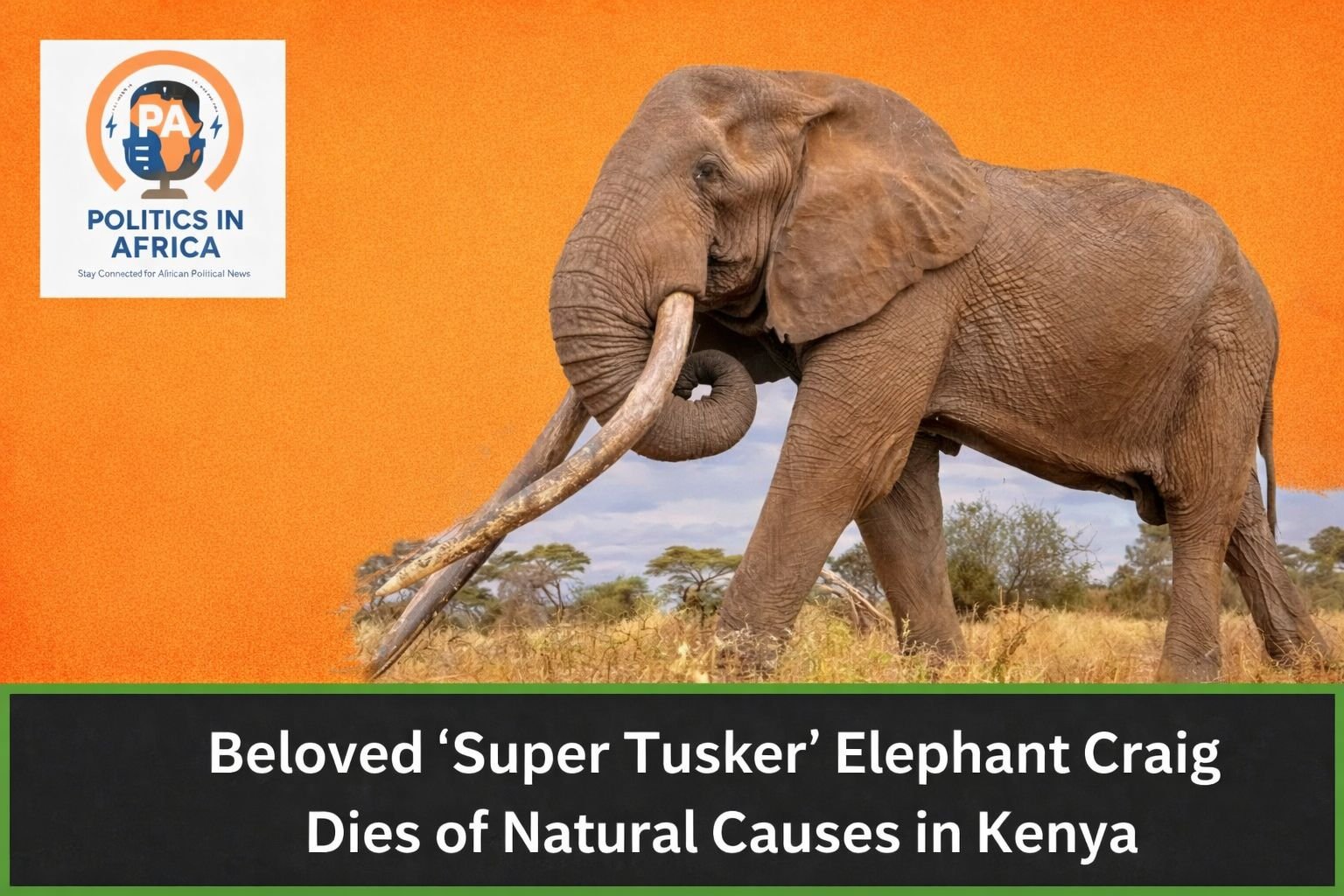
According to Kenya Wildlife Service, the legendary bull elephant passed away on Saturday in Amboseli National Park, southern Kenya. Craig was estimated to be 54 years old and was widely admired for his massive, ground-sweeping tusks and calm temperament.
Conservationists confirmed that Craig died of natural causes, marking the end of a remarkable life spent entirely in the wild. Wildlife groups described him as one of the last remaining super tuskers in Africa — a rare category of bull elephants whose tusks each weigh more than 45 kilograms and are so long they scrape the ground as the animal walks.
Craig was a major attraction for tourists visiting Amboseli, often seen standing patiently as visitors photographed and filmed him. Beyond tourism, he held deep symbolic value for conservationists, serving as proof that long-term protection efforts in Kenya can allow elephants to live full, natural lives.
His importance was further highlighted in 2021 when he was symbolically adopted by East African Breweries’ Tusker brand, reflecting growing partnerships between the private sector and conservation organizations in Kenya.
Kenya’s elephant conservation efforts have shown measurable success. Official figures indicate that the national elephant population increased from just over 36,000 in 2021 to more than 42,000 in 2025. However, this success has also brought new challenges, including habitat pressure in some reserves, leading to controlled relocations of elephants in recent years.
Craig is believed to have fathered several calves, ensuring that his genetic legacy will continue across future generations. His death has been widely described as the loss of not just an elephant, but a national and continental icon — a powerful reminder of what sustained conservation can achieve in Africa.

The Review
82%
Score
PROS
- Good low light camera
- Water resistant
- Double the internal capacity
CONS
- Lacks clear upgrades
- Same design used for last three phones
- Battery life unimpressive